
 (949) 421-3030
The Balance Flipped.
In the latest year, homeowners — not associations — filed the majority of observed direct HOA lawsuits. Three years ago, it was 42.6%.
Source: LS Carlson Law analysis of 50,962 U.S. civil court records, Sept. 2023 – Sept. 2026. Methodology ›
Every State.
We read the court record so you don’t have to — and threw out every case that wasn’t a homeowner and their association facing off directly.
Nationally, it crossed over. California is already there. Florida is split.
Each square is one percent of observed direct owner–association lawsuits. Blue squares were filed by homeowners. Watch where the water line sits against the majority mark.
Homeowners crossed from minority to majority initiators.
“The balance flipped: homeowners went from initiating 42.6% of observed direct HOA lawsuits to 51.6% in the most recent year.”
Check, not a correction. Was the rise just more California cases in the mix? We held each state’s weight constant and re-ran it: 51.2%, vs. 51.6% observed. The crossover holds.
Homeowner empowerment is already the dominant pattern.
“More than three-quarters of observed direct HOA disputes in California were initiated by homeowners.”
Check, not a correction. Would a tighter definition of a California HOA case change the answer? Under a stricter California-specific screen: 77.7%, vs. 76.9% observed. The finding holds.
In condominiums, owners lead.
“Florida’s homeowner-led litigation is showing up most clearly in condominiums: owners initiated 52.8% of observed direct condo disputes.”
Traditional HOA litigation remains association-led.
“Owners initiated just 29.5% of traditional HOA disputes — roughly seven in ten were filed by the association.”
The big number in each section is the headline: the share we actually observed in the court records. Where you see a second figure labeled a check, we re-ran the analysis a different way to test whether the headline could be an artifact of how the data was assembled. Checks confirm or qualify the headline; they are not corrected versions of it.
From minority to majority in three matched years.
Homeowner-initiated share rose in every matched annual cohort. The solid line is the headline. To check that the shift wasn’t just more California cases in the mix, we held the state mix constant across 25 states and re-ran it (toggle the dashed line). It barely moved — the check backs up the headline rather than replacing it.
This is an observed-cohort composition finding, not proof of a nationwide causal shift. The corpus’s court footprint grew from ~818 to ~882 to ~956 distinct court identifiers, which is why we never cite raw volume growth.
We threw out 20,527 cases so the finding would hold up.
A bank foreclosure that names an HOA as a junior lienholder is not an HOA dispute. Neither is a trip-and-fall claim. Only cases where an owner and their association faced each other directly made the cut.
- Direct owner ↔ association disputes 17,136 · 45.5%
- Third-party foreclosure / lien matters 5,734 · 15.2%
- Premises / personal-injury matters 5,226 · 13.9%
- Third party → association 4,092 · 10.9%
- Association → third party 3,363 · 8.9%
- Other / ambiguous → association 1,330 · 3.5%
- Association → other / ambiguous 481 · 1.3%
- Association ↔ association 301 · 0.8%
Associations sue over money. Homeowners sue over their homes.
involved assessments, fees, liens, collections, or foreclosure.
Indiana: 5.0%. Arizona: 82.5%.
The national average hides enormous variation. Homeowner-initiated share of observed direct disputes across the ten largest state cohorts.
These are case-composition statistics — not per-capita litigation rates, and not a ranking of which states have better or worse HOAs.
This isn’t a few notorious HOAs. It’s everywhere.
8,019 homeowner-filed cases were spread across roughly 7,165 different associations. Association filing is the repeat business. Each row below is 50 cases; dark squares involve a repeat association.
 07 — California
Homeowner-led. Already.
More than three-quarters of observed direct HOA disputes in California were initiated by homeowners — and a check under a stricter California-specific case screen (77.7%) confirmed it held in every matched year.
 08 — Florida
Two systems. One state.
Florida’s homeowner-led litigation shows up most clearly in condominiums, where shared roofs, walls and plumbing put owners at the mercy of the board. Traditional HOA litigation remains association-led.
Florida’s headline numbers come from a Florida-specific screen that separates condominiums from traditional HOAs. Taken statewide, Florida stayed association-led (43.9% owner). Did Florida also cross over? We checked by holding county mix constant: owner share was flat, 44.1% → 45.0% → 44.5%. Florida’s story is structure, not crossover.

Homeowners Are Fighting Back. Here’s How to Join Them.
When homeowners know their rights and have a fiercely dedicated advocate at their side, unfair fines, arbitrary rules and selective enforcement don’t stand a chance. Start here.
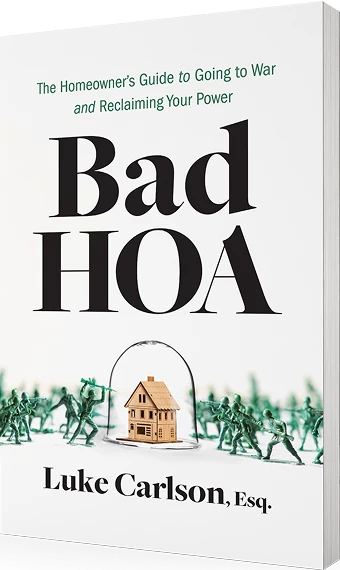 Get the book › Award-Winning Podcast The Bad HOATM Podcast Every episode breaks down a real homeowner grievance — and the paper trail that wins. Listen now › Free Online Webinar Bad HOATM: What Do I Do Now? How to fight a Bad HOATM without an attorney — the STRIKE method in about seventy minutes. Register free ›
Quote it. Cite it. Check it.
Every finding below is written to be quoted with its denominator intact. Click to copy — the citation comes with it.
“Within the observed direct-dispute cohort, the homeowner/member share of lawsuit initiations increased from 42.6% in the first matched year to 51.6% in the latest; a check holding each state’s weight constant showed a similar pattern, although changing court coverage prevents a fully causal national-trend claim.”
“LS Carlson Law identified 17,136 direct owner/member-association disputes within a three-year national corpus of civil court-filing records.”
“Among 7,205 classifiable association-initiated direct cases, 87.7% involved assessments, fees, liens, collections, or foreclosure.”
“Among 5,739 classifiable homeowner/member-initiated direct cases, maintenance or property-condition issues appeared in 49.5%.”
“76.9% of observed direct California owner-association disputes in the national study were owner-initiated.”
“California’s owner-initiation share was 30.1 percentage points above the national three-year direct-dispute cohort.”
“In the strict Florida screen, owners initiated 52.8% of condo/co-op disputes but only 29.5% of traditional HOA/POA disputes.”
“Financial enforcement appeared in 91.4% of classifiable association-filed direct cases in the strict Florida screen.”
Where does the data come from?
LS Carlson Law analyzed 50,962 civil court-filing records dated September 28, 2023 through September 28, 2026, spanning all 50 states and the District of Columbia.
What counts as a “direct” HOA dispute?
A case where a homeowner/member and their association are directly opposed. We excluded mortgage foreclosures naming an HOA as a junior lienholder, premises-injury claims, vendor, insurer and construction disputes — leaving 17,136 direct disputes.
Does this mean HOA lawsuits are increasing?
No. Court-record coverage grew over the study period (roughly 818 to 956 distinct courts), so we never treat raw volume as evidence of litigation growth. The findings are about who initiates — composition, not volume.
Does a homeowner lawsuit mean the homeowner was right?
No. A filed lawsuit is an observable escalation event. The study measures who invoked the courthouse, not who won or whether a claim had merit.
Why is Florida different?
Florida is a split system: owners initiated 52.8% of direct condominium disputes but only 29.5% of traditional HOA disputes. Statewide it stayed association-led, and a fixed-county test showed owner share essentially flat.
Can I use these figures in my reporting?
Yes — please cite LS Carlson Law, PC and keep each statistic with its denominator. The copy buttons above include publication-safe wording and the full citation.
Read Every Number. Check Our Work.
The complete reports include methodology, sensitivity tests, county tables and publication-safe language for every finding. All three arrive together in one email.
- USA The 2026 National HOA Litigation ReportWhen Community Disputes Reach the Courthouse
- CA The 2026 California HOA Litigation ReportWhere Homeowner–Association Conflict Reaches the Courthouse
- FL The 2026 Florida Condominium & HOA Litigation ReportTwo Community Systems. Three Litigation Pathways.
We’ll email you all three studies shortly. On deadline? Call (949) 421-3030.
Covering an HOA story? Get the Homeowner Side.
LS Carlson Law is America’s largest law firm fighting Bad HOAs — and #1 by HOA cases won in the USA. Our attorneys are available for interviews, on-record quotes and live commentary on this study.


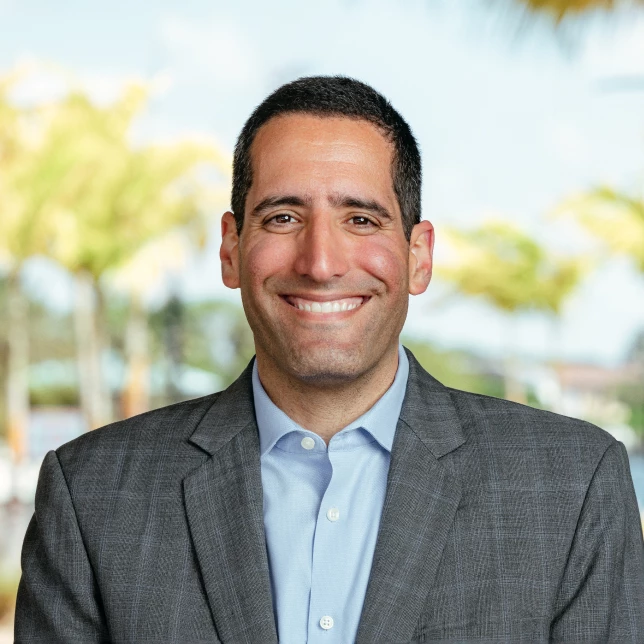
Your HOA Has a Lawyer. So Should You.
The data shows associations file over money, again and again. We only represent homeowners — never boards, never management companies.