
 (949) 421-3030
When the HOA Won't Fix It: A California Homeowner's Guide to Failure to Repair Disputes
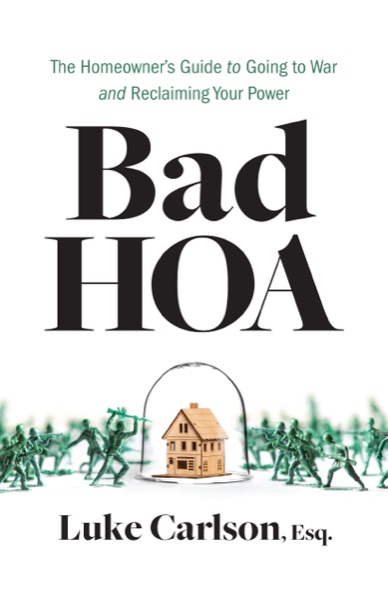
The latest installment of our Bad HOA podcast series revisits one of the most consequential disputes a California homeowner can face: a board that fails to repair what it is responsible for. Roof leaks, drainage failures, and neglected pipes carry real legal weight.
The latest installment of our Bad HOA podcast series revisits one of the most consequential disputes a California homeowner can face: a board that fails to repair what it is responsible for. Roof leaks, broken drainage, neglected common-area pipes, swampy pools that pull down property values — these are not minor inconveniences. They are governance failures with real legal weight. The episode reframes failure-to-repair complaints through the STRIKE method, a step-by-step framework for documenting and escalating maintenance disputes. This article distills that discussion into a practical guide to what your association owes you under the Davis-Stirling Act, where its obligations end and yours begin, and how to enforce maintenance duties when the board has decided the problem can wait.
What an HOA Actually Owes You
Under Cal. Civ. Code §4775, the association maintains the common area and each owner maintains the interior of the separate interest. That is the default, and it controls whenever the CC&Rs are silent or ambiguous.
The obligation runs deeper than reactive repair. The board has an affirmative duty to inspect, maintain, and act with reasonable care across the entire common area — roofs, hallways, elevators, drainage systems, exterior walls, landscaping, security gates, and the pipes hidden behind your walls. "We never heard about it" is rarely a defense when reasonable inspection would have surfaced the problem.
Three categories control the analysis:
- Common areas. Pools, clubhouses, roofs, hallways, elevators, drainage, exterior walls, security gates, and other shared infrastructure.
- Exclusive use common areas. Patios, balconies, assigned parking. The structure itself is association property; only you may use it. Repair responsibility is usually split — the CC&Rs control the allocation.
- Separate interests. The interior of your unit. Pipes behind the wall, however, are typically common area even when the drywall itself is yours.
Where the CC&Rs Meet Davis-Stirling
Maintenance allocation is supposed to live in the CC&Rs. Well-drafted documents include a maintenance matrix that resolves edge cases at a glance. Older documents — typed, photocopied, edited with whiteout — often leave the question open.
When the CC&Rs are silent, Davis-Stirling fills the gap. That is by design. The drafters anticipated imperfect governing documents and built the statute to prevent associations from disclaiming responsibility for ambiguity they themselves created. Document hierarchy also matters: statutory law sits above the declaration, which sits above the bylaws, which sit above the operating rules. A CC&R provision that conflicts with Davis-Stirling generally does not control.
If you read your CC&Rs and cannot tell who owns the obligation, send a written request to the board for an official interpretation. Forcing the board to take a position is itself a strategy.
The Fiduciary Layer
A failure-to-repair claim rarely stands on ordinary negligence alone. Directors of a California HOA owe a fiduciary duty to the membership — a heightened standard well above the ordinary standard of care. A board sitting on a fully funded reserve account while a roof rots, or one that repaired the president's building first while building three waits two years, is not simply careless. Selective repair and self-dealing turn a maintenance dispute into a breach-of-fiduciary claim.
The board's monthly financial review obligation also matters. A board that has been reviewing operating accounts, reserves, and bank statements every month may have a hard time claiming it did not know which components were due for repair. The reserve study required every three years is documentary evidence of notice the board cannot easily disown.
Common Failure-to-Repair Patterns
After hundreds of California HOA disputes, the patterns repeat:
- The leaking roof and contractor "out." The board hires a roofer, the roofer opens a hole and leaves it uncovered before an atmospheric river rolls in, and twenty units flood. Agency law generally pulls the loss back to the association — the board generally cannot hide behind a negligent contractor it chose.
- The neglected drainage system. Pooled water cracks foundations or undermines retaining walls. After one heavy season, the deferred-maintenance bill is many times higher than the original repair would have cost.
- The "it's your problem" dodge. The management company tells you the pipe behind your drywall is on you. The CC&Rs say otherwise. The dispute is about who pays, not what is true.
- Selective repair. The clubhouse roof gets fixed in a week; the building-three roof waits two years. Pattern data is powerful evidence of breach of fiduciary.
- The deferred-maintenance spiral. Years of under-funded reserves give way to a sudden special assessment when everything fails at once. Sometimes there is a self-dealing pattern hidden inside the books — the board president's cousin paid ten times what every other vendor was paid.
Independent Reports Change the Conversation
A homeowner's own opinion about a leak's origin may carry little weight in front of a board attorney. A licensed, credentialed third party's report tends to carry significant weight. You may not need destructive testing on day one — a preliminary opinion from a water-intrusion professional, a structural engineer, or a drainage consultant is often enough to shift the dynamic. Independent professional opinions like these often matter as much as the underlying observation.
A second professional may also quantify the repair cost so the association sees a real dollar figure, not your estimate. When you are documenting recoverable damages, the credentials of the person delivering the opinion matter as much as the opinion itself. Pair the report with your own timestamped photos and video — the homeowner's documentation grounds the professional's conclusions in the day-to-day reality of the property.
Notice, the STRIKE Method, and When to Escalate
Once the association has written notice — your complaint, an inspection report, a line in board minutes — the legal clock begins. Inaction after notice is some of the strongest evidence of negligence and breach of fiduciary you can build. The reverse is also true: a leak you sit on for months may shift damages back onto you under the doctrine of laches.
A practical framework runs through six steps:
- Stay calm. Every email may become evidence. A measured letter reads better than an all-caps tirade, even when the all-caps version is more honest.
- Track everything. Date of first notice, every follow-up, photos with timestamps, repair estimates from licensed contractors, board minutes acknowledging the issue. Memorialize verbal conversations in writing afterward.
- Record and organize evidence. A clean damage timeline, comparable areas the board did repair, and independent reports all in one place. Approach the file as if it could land in court — because it may.
- Invest in knowledge. Read the CC&Rs, the reserve study, and the relevant sections of Davis-Stirling. Ambiguities are leverage you can use.
- Keep it precise. "You are letting my house fall apart" is not actionable. "Per CC&R §7.2 and Cal. Civ. Code §4775, the association is responsible for maintenance of this component. I provided written notice on [date]. No repairs have been initiated" is.
- Escalate only if necessary. The Davis-Stirling Internal Dispute Resolution process (§§5900–5915) is often the right first step. When a board member is intent on rage-baiting rather than information transfer, an IDR session may not be productive — terminate the meeting and move toward formal ADR or counsel.
For homeowners working a maintenance dispute on their own before counsel becomes necessary, the broader six-step HOA dispute resolution framework overlays cleanly onto the STRIKE method and helps pace the file as evidence accumulates.
When the file matures past self-help, an experienced HOA attorney in California can evaluate whether the leverage you have built supports a demand letter, an IDR escalation, or formal litigation under Davis-Stirling.
When the Situation Calls for Counsel
Most maintenance disputes do not require litigation. The ones that do tend to share a few signals: ongoing property damage that is getting worse in real time, a board that denies responsibility despite clear CC&R language, written notice followed by silence, health and safety risk from mold or electrical hazards, reserves sitting unused while components fail, an HOA that has already retained counsel, or a sudden special assessment papering over years of deferred maintenance. When the other side has a lawyer, you generally need one too — interacting alone with opposing counsel rarely improves your position. If you are seeing several of these signals at once, that is usually the point to talk to counsel who handles California HOA disputes regularly, before the file gets harder to defend.

About the Author
State Bar License: 268443

Looking to End Your HOA Dispute?
Trust The Country's Most Experienced HOA Attorneys
As Featured In


Looking to End Your HOA Dispute?
Trust The Country's Most Experienced HOA Attorneys

As Featured In

Tell Us About Your HOA Dispute
When you hire LS Carlson Law, you can be assured you'll be getting an aggressive firm fully dedicated to achieving your legal objectives. Don't take our word for it, we encourage you to take a look at the numerous five-star client reviews. Call us now or fill out the form to set an appointment.