
 (949) 421-3030
HOA Special Assessment Limits in California: Homeowner Protections
When you buy a home in a community governed by a homeowners association (HOA), you agree to pay regular dues that support shared services, amenities, and long-term maintenance. However, when an HOA imposes an unexpected special assessment—especially a substantial one—it can catch homeowners off guar
When you buy a home in a community governed by a homeowners association (HOA), you agree to pay regular dues that support shared services, amenities, and long-term maintenance. However, when an HOA imposes an unexpected special assessment—especially a substantial one—it can catch homeowners off guard and lead to significant financial strain.
In California, the law offers clear limits on how and when HOAs can issue special assessments, and it also gives homeowners specific rights and remedies. Understanding these protections is essential for anyone who wants to challenge an HOA special assessment or make sure their board is acting lawfully.
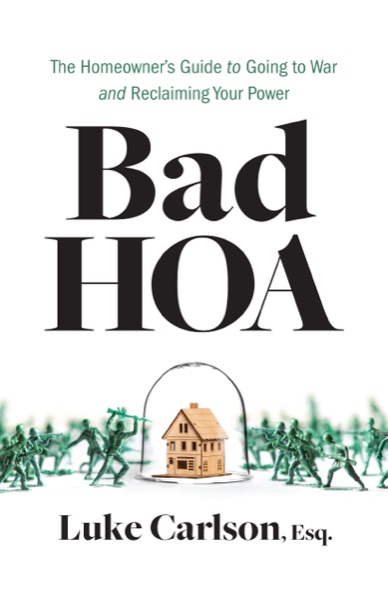
Special assessments have been in the news across California in 2026, with condo owners reporting bills of $49,000 and more tied to major repairs. We took up the topic on episode 51 of the Bad HOATM podcast, including the question homeowners ask us most often when one of these notices arrives: do I actually have to pay this?
At LS Carlson Law, we help homeowners work through these situations. Whether you're facing an unfair assessment, denied access to key financial records, or a board that isn't following the proper process, we're ready to step in and help you fight back.
What Is a Special Assessment?
A special assessment is an extra charge an HOA levies on its members outside of regular monthly dues. These assessments typically cover expenses the annual budget and reserve fund do not, such as fire damage, a failed sewer line, a slope failure, or a sharp jump in insurance premiums.
There are different types of assessments depending on the need:
- Emergency assessments: Charges for the narrow situations California law treats as emergencies, covered in detail below.
- Capital improvement assessments: Used to pay for upgrades such as elevator replacements, structural reinforcements, or beautification projects.
- Reimbursement assessments: Cover specific costs tied to individual units or violations of the HOA covenants.
Not every special assessment signals a problem. Some expenses genuinely arrive without warning. Others are the bill for years of deferred maintenance—a roof, balconies, or waterproofing that prior boards kept putting off until a repair that once cost a few thousand dollars grew into one costing tens of thousands.
The Davis-Stirling Act governs all HOA assessments in California, including special assessments, and sets strict rules about how and when they can be imposed.
A special assessment often points to an underlying reserve problem. California law already requires the board to review the association's reserve fund monthly and disclose its funding level every year, so an assessment that arrives with no warning is frequently a sign those reviews were skipped, or the shortfall was known and never shared with members.
California HOA Special Assessment Cap
Under California law, HOAs can't impose just any amount whenever they choose. Cal. Civ. Code §5605(b) bars the board from imposing special assessments that, in the aggregate, exceed 5% of the association's budgeted gross expenses for the fiscal year without the approval of a majority of a quorum of members at a member meeting or election. For this section, a quorum means more than 50% of the members. The same subdivision caps regular assessment increases at 20% over the prior year without that approval.
In practice, if your association has 200 members, at least 101 must take part in the vote, and the assessment passes with a majority of the votes cast—not a majority of all 200 owners.
This is often referred to as the California HOA special assessment cap, and it's meant to keep boards from covering poor planning or non-emergency expenses without input from homeowners. An assessment that exceeds this limit without a valid vote or a qualifying emergency can be challenged by affected members.
Special Assessment Notice Requirements
Homeowners have a legal right to be notified of a special assessment. Under Cal. Civ. Code §5615, the association must give each member individual notice of any increase in regular or special assessments not less than 30 nor more than 60 days before the increased assessment becomes due.
Section 5615 sets the timing, not the contents. A well-prepared notice typically includes:
- The amount of the assessment
- The reason for the assessment
- The due date(s) and payment plan options, if available
- The financial documents supporting the need (e.g., reserve study or repair estimates)
If your board imposes a special assessment without proper notice or won't explain what it is for, you may have grounds to challenge it legally.
The HOA Assessment Approval Process
Not all special assessments require a vote, but many do. Here's how it works in California:
- At or below 5%: If special assessments for the fiscal year total 5% or less of budgeted gross expenses, the board can generally approve them on its own.
- Above 5%: A majority of a quorum of members must approve the assessment at a meeting or election.
- Emergencies: Cal. Civ. Code §5610 lets the board exceed the cap without a vote only in the situations listed below.
Section 5610 defines an emergency as one of three things:
- An extraordinary expense required by a court order.
- An extraordinary expense necessary to operate, repair, or maintain property the association is responsible for, where a threat to personal health or safety, or another hazardous condition, is discovered on the property.
- An extraordinary expense necessary to repair or maintain property the association is responsible for that could not have been reasonably foreseen when the board prepared and distributed the annual budget report.
SB 900, effective January 1, 2025, broadened the second category. It previously reached only threats to personal safety; it now also covers threats to health, other hazardous conditions, and the cost of operating the property, not just repairing it. That change can matter for situations such as a failed gas, electrical, or water system.
The third category carries an extra step. Before imposing or collecting the assessment, the board must pass a resolution with written findings explaining why the expense is necessary and why it was not, or could not have been, reasonably foreseen in the budgeting process. That resolution must be distributed to members with the notice of assessment.
Fighting Improper HOA Assessments
If you believe your HOA is levying an improper or excessive assessment, there are several ways to push back:
1. Request Financial Documents
Start by asking what the money is for and how the board arrived at the amount. Under Cal. Civ. Code §5200, association records include financial statements, reserve account records, meeting minutes, executed contracts, and any written board approval of vendor or contractor proposals, and §5205 gives you the right to inspect and copy them. If the association signed a contract with a roofer or other vendor for the assessed work, you can request it.
Competing bids are not on that statutory list, so a board may decline to hand them over. It should still be able to explain how it chose the contractor. For the complete set of records you can ask for, see our guide to HOA documents you have the right to request.
2. Challenge the Assessment Formally
Submit a written request to the board asking for clarification and documentation. If you don't receive a timely or adequate response, escalate the issue.
3. Call for a Community Vote
If the board is sidestepping the HOA assessment approval process or ignoring membership rights, organize with fellow members to demand a vote or request a special meeting.
4. File a Legal Challenge
An assessment that exceeds the §5605 cap without a member vote isn't properly authorized, and homeowners have more than one way to push back on it. Under Cal. Civ. Code §5658, you can pay the disputed amount under protest and file directly in small claims court, up to the jurisdictional limit set by Code of Civil Procedure §§116.220 and 116.221—available in addition to, not instead of, the association's internal dispute resolution process. For larger disputes, homeowners can pursue a civil action to stop an improper assessment or recover amounts already paid, including as a defense to a foreclosure built on an invalid charge.
One protection worth knowing: unlike most Davis-Stirling disputes, assessment challenges are exempt from the Act's alternative-dispute-resolution prerequisite under Cal. Civ. Code §5930(d)—you are not required to mediate or arbitrate before filing suit over an improper assessment, though many homeowners still try to resolve it informally first.
An experienced California HOA attorney can help you evaluate your legal options, especially when dealing with noncompliant HOA boards or management companies.
When Emergency Assessments Go Too Far
The emergency label is where many assessment disputes start. The three categories in §5610 are narrow, and an expense that was predictable does not fit the "unforeseen" category. A roof at the end of its expected life, balconies that decayed over decades, or exterior waterproofing a prior board kept deferring are, in many cases, foreseeable.
A few signs suggest an "emergency" assessment may not qualify:
- The board relies on the unforeseen-expense category but distributed no resolution with written findings alongside the notice.
- The problem shows up in earlier reserve studies, inspection reports, or board minutes.
- The board offers a long payment schedule, which can undercut the claim that the money was needed immediately—unless the association took out a loan to pay the contractor up front.
- The money is going to upgrades rather than the repair described in the notice.
Insurance is part of the picture too. Some boards decide not to file a claim because another claim could get the policy canceled, and some associations are underinsured and assess members to cover the gap. A steep premium increase that threatens coverage the governing documents require may itself qualify as an unforeseen expense. It is fair to ask whether a claim was filed, and if not, why not.
Should You Fight a Special Assessment or Pay It?
Winning a process argument does not make a needed repair go away. If the board skipped a required vote or misused the emergency label, a challenge may succeed—and the association can often go back, follow the correct process, and approve the same assessment. Meanwhile, you have paid legal fees, and the roof still needs replacing.
It helps to separate two kinds of problems:
- Process problems: No vote, a notice outside the 30-to-60-day window, or an emergency label that does not fit. These may give you a legal basis to challenge the assessment, but the money is often still needed.
- Result problems: A single bid from a contractor with ties to a board member, a price far above market, or money diverted from the stated purpose. These are often the stronger reason to push back, because fixing them can reduce what you owe.
Most of the assessments making news involve an imperfect process but a real repair need. In that situation, the practical path is usually a payment plan, a closer look at the bids and the contract, and pressure on the board to plan ahead—not a lawsuit to stop the work. If the process is what bothers you most, running for an open board seat is one of the most direct ways to change how your association budgets for the next roof.
What Happens If You Don't Pay a Special Assessment?
Refusing to pay a valid assessment tends to make it more expensive. Late charges, interest, collection costs, and attorney's fees can be added on top of the original amount. The association's options generally escalate in this order:
- A notice of the delinquency, followed by a lien recorded against your property.
- A lawsuit to collect, including in small claims court.
- Foreclosure—but under Cal. Civ. Code §5720, only once the delinquent assessments reach at least $1,800 or are more than 12 months past due. Late charges, collection costs, attorney's fees, and interest do not count toward the $1,800.
Selling the home does not avoid the debt. Once a lien is recorded, it generally has to be cleared before the sale can close, which usually means it is paid out of your proceeds in escrow.
Protecting Yourself from Financial Hardship
If you're facing a steep special assessment that you can't afford, you may have options. Some HOAs offer payment plans, depending on the community rules and governing documents, and you can ask the board to spread out the payment schedule in cases of genuine financial hardship.
California also gives you a formal right to be heard. After the association sends a notice of delinquency, you can submit a written request to meet with the board about a payment plan. Under Cal. Civ. Code §5665, the request must be mailed within 15 days of the postmark on the association's notice, and the board must meet with you in executive session within 45 days of your request. The statute requires the meeting, not a particular plan. If you do reach a plan and keep to its terms, additional late fees do not accrue during the plan period, although the association can still record a lien to secure the debt.
Keep in mind: refusing to pay without communicating your intent or seeking legal advice could lead to late fees, collection actions, or even foreclosure proceedings in extreme cases.
Work with an Attorney to Challenge HOA Special Assessments
A lawsuit does not fix the roof, and not every assessment is worth fighting. It is usually worth a call when:
- No member vote took place on an assessment above the 5% cap, and no emergency category fits.
- The board won't explain how it chose the contractor or what the money is for.
- The funds appear to be going somewhere other than the stated purpose.
- You can't afford the assessment and haven't been able to reach a payment plan on your own.
- You have received a lien or a foreclosure notice.
At LS Carlson Law, we focus on fighting improper HOA assessments and protecting homeowners from being taken advantage of by their associations. Our legal team can review your governing documents, assess whether the board followed the proper procedures, negotiate with the association, and take action on your behalf. Whether you need help understanding your rights or you're ready to start legal proceedings, we're here to guide you every step of the way.
Protect Your Property and Finances — Take Action Today
If you believe your HOA has overstepped its authority or imposed an illegal special assessment, don't wait. A good first step is to put your complaint to the board in writing. Then contact LS Carlson Law to speak with our experienced legal team. We'll help you evaluate your case, understand your rights, and decide whether to fight, negotiate, or pay.

About the Author
State Bar License: 268443

Looking to End Your HOA Dispute?
Trust The Country's Most Experienced HOA Attorneys
As Featured In


Looking to End Your HOA Dispute?
Trust The Country's Most Experienced HOA Attorneys

As Featured In

Tell Us About Your HOA Dispute
When you hire LS Carlson Law, you can be assured you’ll be getting an aggressive firm fully dedicated to achieving your legal objectives. Don’t take our word for it, we encourage you to take a look at the numerous five-star client reviews. Call us now or fill out the form to set an appointment.