
 (949) 421-3030
How to Prove HOA Negligence in California: A Homeowner's Playbook
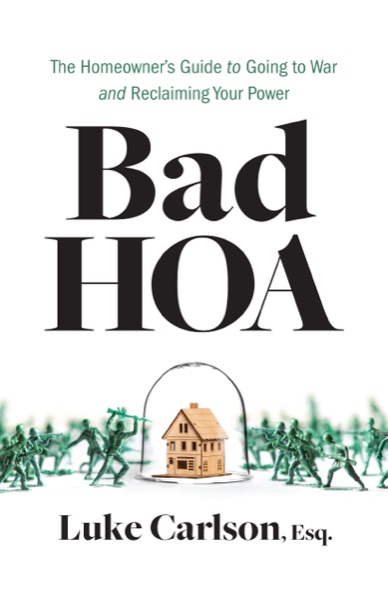
The latest installment of our Bad HOA podcast series revisits a topic that surfaces in nearly every serious homeowner dispute: negligence. When a board ignores a broken stair or lets a common-area pipe fail, the problem stops being about bad manners and becomes a question of legal responsibility.
The latest installment of our Bad HOA podcast series revisits a topic that surfaces in nearly every serious homeowner dispute: negligence. When a board ignores a broken stair, lets a common-area pipe fail, or slashes dues so low that the community can no longer maintain what it owns, the problem stops being about bad manners and becomes a question of legal responsibility. This article distills that conversation into a standalone guide to how HOA negligence works in California — the elements a claim requires, how the business judgment rule fits in, and the practical steps that separate a strong case from one a board can brush aside.
The Four Elements of an HOA Negligence Claim
Negligence is not a feeling that the board behaved badly. It is a legal claim built from four specific elements, and a homeowner generally needs all four to hold an association accountable:
- Duty — The association has an obligation to maintain, repair, and reasonably inspect the common areas it controls.
- Breach — The board fell below the standard of care by doing something unreasonable, or by failing to act when a reasonable board would have.
- Causation — The breach actually caused the harm. An unrepaired roof leak that leads to mold is a textbook example: the failure to fix must tether directly to the damage.
- Damages — There is real harm, such as property damage, personal injury, or loss of use. A homeowner who cannot fully use a unit because of a persistent nuisance may have a measurable economic loss.
Understanding these elements is what separates a complaint from a claim. If you are weighing whether you can sue an HOA for negligence, each element is a box the facts must check.
The Board's Duty and the Standard of Care
Why does a board owe you anything in the first place? Because its members are managing other people's money and property. That role carries a duty to meet a reasonable standard of care, and in California a board member also carries a heightened fiduciary duty. The practical question a court asks is simple: what would a reasonable board have done under the same circumstances? A decision backed by investigation generally holds up; a decision made on a hunch generally does not.
California law also shields volunteer directors from personal liability beyond insurance limits when they act in good faith and without gross negligence, under Cal. Civ. Code §5800. Conduct that crosses into reckless or grossly negligent territory can strip that protection, which is one reason the quality of a board's decision-making matters so much.
The Business Judgment Rule — and How to Push Past It
The business judgment rule is a board's favorite shield. Courts do not want to micromanage volunteer decisions, so California follows a rule of judicial deference to good-faith maintenance choices made after reasonable investigation, set out in Lamden v. La Jolla Shores Clubdominium Homeowners Assn. (1999) 21 Cal.4th 249. That deference is not automatic, though — it depends on the board actually doing the work.
You push past the shield by attacking the logic behind the decision. Consider a board that cuts down every tree in the common area. If the president can only say the trees "looked diseased," the decision is likely to fall below the standard of care. If instead the board hired an arborist, reviewed a written report, and notified the community before acting, the same decision is far more defensible. The presence or absence of a paper trail, a qualified professional's input, and community involvement is often exactly what a judge would consider reasonable.
Common Negligence Fact Patterns
Certain scenarios come up again and again. These patterns help you recognize when poor governance has crossed into a potential claim:
- Ignored known hazards — A broken stair, a dark stairwell, a faulty pool gate, or a cracked walkway, paired with repeated written complaints and no action. This is the cleanest negligence pattern.
- Common-area failures that damage units — A pipe, roof, or drainage system the association is responsible for fails and damages the homes below it.
- Financial negligence — A board cuts dues so aggressively that the community cannot fund upkeep, and the pool and common areas fall into disrepair. Underfunding can lead directly to a failure to maintain.
- The contractor problem — A vendor does a poor job, but the association can still be responsible under an agency theory, and it remains obligated to solve the underlying problem even after a first attempt fails.
- Negligent hiring and supervision — Choosing an unlicensed or uninsured vendor and ignoring red flags with no oversight.
- Security and drainage failures — Broken gates or cameras, or unaddressed drainage, which may be both negligence and a violation of the governing documents.
When It Isn't the HOA's Responsibility
Not every problem is the association's fault, and honest framing strengthens your credibility. Under Cal. Civ. Code §4775, the association generally maintains the common areas while owners maintain their separate interests. Damage that starts inside your own unit — a clogged bathtub, the trap under your sink — is typically your responsibility, not the board's. A pure accident with no notice and no breach may not be anyone's negligence at all. Sorting out which repairs belong to the association and which belong to you is often the first question that decides whether a claim exists.
Building and Documenting Your Case
This is where homeowners win or lose. The single most valuable habit is to put everything in writing. Verbal complaints generally do not count for much; a dated written record of what you reported and when is what proves the board was on notice. If you raise an issue in person, follow up with a short email confirming the conversation.
Stay clinical when you communicate. Write every message as though a judge, mediator, or opposing counsel will one day read it — because they may. Strip the emotion, state the facts, and send it in the morning rather than at 3 a.m. Then keep an organized file: a timeline of complaints and responses, dated photos and video of the hazard and the damage, repair estimates, and medical records if there is an injury. A clean file that shows causation and damages saves time if the matter ever reaches an attorney. Frame your language around obligations, not insults — "the association has a duty to maintain this component" lands better than "you were negligent."
Escalating the Right Way — and the Mistakes to Avoid
Be the reasonable party first. Try to work the problem out, and escalate only when necessary — a formal written demand, and in California a homeowner's right to invoke internal dispute resolution (IDR) under the Davis-Stirling Act, codified at Cal. Civ. Code §5900. IDR is designed to bring the homeowner and board to the table before litigation. If you show up in good faith and the board does not, you have preserved your position for whatever comes next.
A few missteps can quietly sink an otherwise strong case:
- No notice, no paper trail — If you cannot prove what the board knew and when, causation becomes very hard to establish.
- Self-help repairs — Fixing or altering the hazard yourself before it is documented can destroy the evidence and shift blame to you.
- Illegal recording — California is an all-party consent state under Cal. Penal Code §632. A recording made without consent may be thrown out and can turn you into the violator.
- Withholding dues — It feels justified, but it generally hands the association ammunition and can flip you into the defendant.
- Waiting too long — Ongoing damage can run past a statute of limitations. Being proactive protects your rights.
When to Bring in an Attorney
Some signals suggest it may be time for counsel. Ongoing or escalating damage — water intrusion that is turning into mold, or a structural issue that keeps worsening — is one, because delay can compound both the harm and the legal risk. So is any personal injury. And there is a simple tell from the episode: if the association shows up with its own attorney, it may be time to talk to yours. If you are dealing with persistent water intrusion or a board that has stopped responding, an experienced California HOA attorney can help you evaluate whether the four elements are present and how to move forward.
Practical Takeaways
HOA negligence is provable when you treat it like the legal claim it is. Confirm the board owed a duty over the component at issue, document the breach and the harm in writing, and connect the two with a clean timeline. Stay reasonable, use the escalation tools California gives you, and avoid the mistakes that hand the board a defense. Do that, and a frustrating dispute becomes a case a board — and a court — has to take seriously.
This article is for general educational purposes and is not legal advice. For guidance on your specific situation, consult a qualified attorney licensed in your state.

About the Author
State Bar License: 268443

Looking to End Your HOA Dispute?
Trust The Country's Most Experienced HOA Attorneys
As Featured In


Looking to End Your HOA Dispute?
Trust The Country's Most Experienced HOA Attorneys

As Featured In

Tell Us About Your HOA Dispute
When you hire LS Carlson Law, you can be assured you'll be getting an aggressive firm fully dedicated to achieving your legal objectives. Don't take our word for it, we encourage you to take a look at the numerous five-star client reviews. Call us now or fill out the form to set an appointment.