
 (949) 421-3030
HOA Mediation vs. Litigation: Resolving Disputes in California
Most California homeowners who want to sue their HOA discover that mediation comes first. Under the Davis-Stirling Act, attempting alternative dispute resolution is a prerequisite to most enforcement lawsuits, and skipping it can cost you the right to recover attorney fees even if you later prevail.
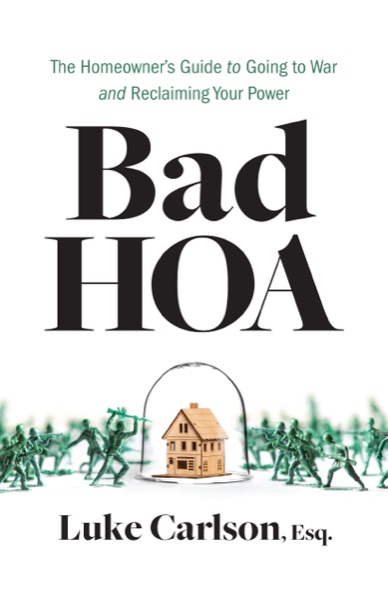
Almost every homeowner who calls our firm about an HOA problem opens the same way: they want to sue. It is an understandable instinct, and it is also why we devoted a recent episode of the Bad HOA podcast to the step that comes first. In most California HOA disputes, mediation is not a detour around the courthouse. It is the door you have to walk through to get there.
HOA Mediation Is Usually Required, Not Optional
The single most common misconception about HOA mediation is that it is voluntary. Under the Davis-Stirling Act, a homeowner generally must attempt alternative dispute resolution before filing an enforcement action seeking declaratory, injunctive, or writ relief. See Cal. Civ. Code §5930. The statute defines ADR broadly, at Cal. Civ. Code §5925, to include mediation, arbitration, and other nonjudicial procedures conducted by a neutral party. In practice, when attorneys in this area say ADR, they usually mean mediation.
This is separate from internal dispute resolution, the association's own internal process. IDR is a different mechanism with its own requirements, and satisfying one does not necessarily satisfy the other.
The consequence of skipping this step is what makes it worth understanding. A homeowner who files suit without attempting ADR may prevail at trial, move for attorney fees, and lose that motion. Courts may consider a party's unreasonable refusal to participate in pre-litigation ADR when deciding fee awards under Cal. Civ. Code §5960. We are sometimes brought in for a second opinion on a lawsuit filed by a general real estate attorney, and one of the first things we look for is the certificate confirming ADR was attempted. When it is absent, the case may have to be dismissed and restarted. Whether an HOA pays your attorney fees often turns on procedural history, not just on who was right.
What Happens After You Demand ADR
A well-drafted Request for Resolution does more than check a box. It lays out the facts and the legal basis of the dispute, and it is frequently the first time the association's attorney learns what actually happened. Boards do not always brief their counsel accurately.
Once served, the other side generally has 30 days to respond in writing, and a failure to respond is deemed a rejection under Cal. Civ. Code §5935. Responses tend to fall into recognizable patterns:
- A prompt agreement to mediate, sometimes within days, often from an attorney who was unaware of the underlying facts.
- An agreement that arrives on day 29 or 30, holding the full statutory window.
- A request for an extension. Granting a reasonable extension is usually the better course, because the party that appears unreasonable tends to lose credibility with a judge later.
- No response at all, which is deemed a rejection and may open the door to filing suit while preserving your fee claim.
If the deadline passes in silence, the prudent step is a follow-up letter with proof of service rather than a lawsuit on day 31. An association that later claims it never received the request should not be handed that argument. Homeowners often worry that this sequence burns time they cannot spare. It generally does not: the statute of limitations is tolled during the response period and the ADR process itself under Cal. Civ. Code §5945. The process is also time-bound rather than open-ended, and costs are typically shared between the parties.
How the Mediator Gets Chosen
Mediators in this field are usually retired judges or attorneys with two decades or more of practice, working through established services. Selection is a negotiation between counsel, and scheduling is frequently the harder half of it: the homeowner, both attorneys, board representatives, and the mediator all have to land on the same day.
Experience with the Davis-Stirling Act matters most. A mediator who has not worked in this area may not grasp why a consulting professional's report is significant, or how ambiguity in the CC&Rs is typically resolved. Style matters too. A mediator who tells each room in turn that its case is hopeless is applying pressure rather than analysis, and a mediator so committed to neutrality that they only carry numbers back and forth rarely moves a dispute. The most effective neutrals read the briefs and are willing to tell a board plainly where it is wrong.
What Mediation Day Actually Looks Like
In California, the parties are typically placed in separate rooms on the same floor, and the mediator moves between them. Whether they begin with your room or the association's reflects the mediator's practice, not the merits. Sessions are commonly booked as a half day or a full day, and much of that time is spent waiting while the mediator works the other room.
The mediation brief carries the most weight, submitted in advance so the day is not spent explaining the dispute from scratch. When a mediator opens with pointed questions about your brief, that is a good sign: it means they read it. Where the dispute involves common areas or property damage, photographs, video, and a simple slide presentation often communicate more in five minutes than an hour of argument. Discussions are confidential, which is what allows both sides to speak candidly, and it also means the mediator's assessment of the association's exposure is generally not evidence you can carry into court later. Related disputes over fines and special assessments follow the same track.
The Three Realistic Outcomes
People sometimes arrive intending to win their mediation. That framing does not fit the forum. A mediator facilitates; they cannot order an association to do anything. A retired judge can tell a board it is in a hopeless position and the board can still refuse to move. What drives resolution is not the mediator's authority but what waits on the other side of the day, because once ADR is complete the path to a lawsuit is open and the fee claim is preserved.
That leaves three outcomes worth planning for: you obtain substantially what you asked for, you obtain nothing because the association took an unreasonable position, or you settle somewhere in the middle. Deciding in advance which compromises are acceptable is the work that makes the day productive.
The Association's Insurance Carrier Is Often the Real Decision Maker
Most associations carry errors-and-omissions and directors-and-officers coverage, because boards are staffed by volunteers who sometimes act carelessly. Because policies generally require notice of any threatened claim, your ADR demand is often forwarded to the carrier, and the carrier may participate by phone or send a representative.
This frequently helps. Insurance defense counsel has no relationship with the board and no stake in the grievance; the analysis is simply whether there is exposure. That introduces a more clinical voice into a room that may otherwise be reinforcing its own position. Boards that did not notify their carrier and arrive without anyone authorized to settle are a different situation, and often a sign the session is not worth continuing.
When Litigation Becomes the Right Move
You are not obligated to sit through a mediation that is going nowhere. If the other side appears in bad faith, without a brief or a decision maker, ending the session early is a legitimate choice. Mediation is billed by the half day, day, or hour, and there is little reason to fund a session nobody intends to use.
When ADR does not resolve the dispute, the certificate confirming that ADR was completed or refused is filed with the complaint under Cal. Civ. Code §5950, and the question resurfaces on any later fee motion. Litigation is more formal, slower, and more expensive, but it produces a binding decision, which mediation cannot. Understanding what to expect during HOA litigation helps put the choice in context, as does a broader view of how disputes move from mediation to litigation.
Practical Takeaways
- Do not file first. In most enforcement disputes, attempting ADR comes before the lawsuit, and skipping it can jeopardize a later fee award.
- Treat the Request for Resolution as advocacy, not paperwork. It may be the association's attorney's first accurate account of the dispute.
- Calendar the 30-day response window, and document service so a claim of non-receipt cannot be manufactured.
- Ask about your mediator's Davis-Stirling experience before agreeing to them.
- Settle your objectives and your acceptable range with your attorney before the session, not during it.
- Get any agreement in writing. Terms drafted at hour ten can be ambiguous, and a settlement in principle followed by a properly prepared long-form agreement is generally safer than relying on a handshake.
- Expect the carrier to be involved, and recognize that its risk analysis may work in your favor.
Mediation and litigation are not competing philosophies; in California they are sequential steps, and how well you handle the first one shapes your position in the second. If you are weighing an HOA dispute and are unsure where you stand, our California HOA attorneys can review the facts and procedural posture with you. Contact us to schedule a consultation.

About the Author
State Bar License: 268443

Looking to End Your HOA Dispute?
Trust The Country's Most Experienced HOA Attorneys
As Featured In


Looking to End Your HOA Dispute?
Trust The Country's Most Experienced HOA Attorneys

As Featured In

Tell Us About Your HOA Dispute
When you hire LS Carlson Law, you can be assured you'll be getting an aggressive firm fully dedicated to achieving your legal objectives. Don't take our word for it, we encourage you to take a look at the numerous five-star client reviews. Call us now or fill out the form to set an appointment.